
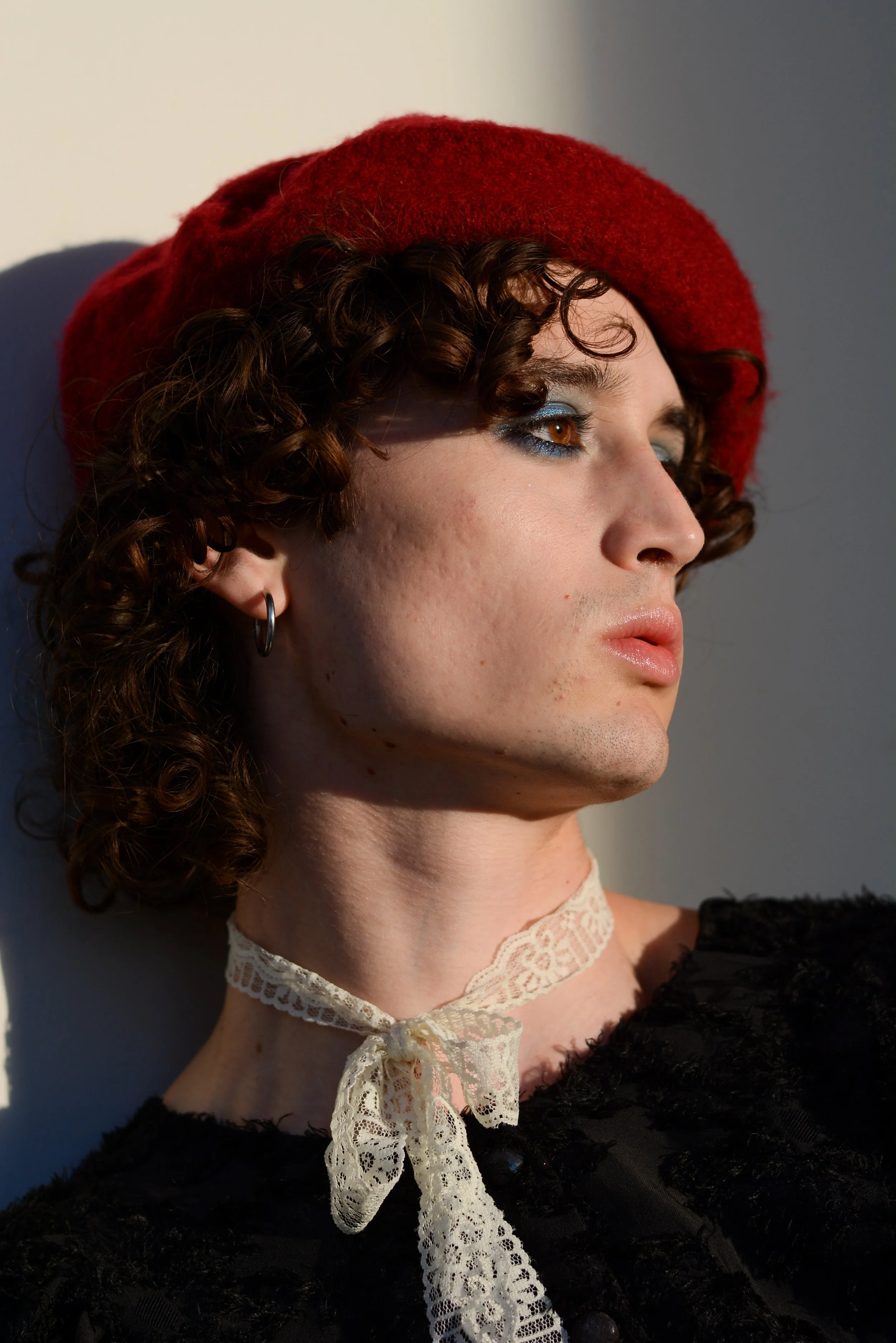
Quinn Wynacht (they/them) is a recent graduate from UCLA, where they earned a B.A. in Dance and a B.S. in Environmental Science, graduating magna cum laude. A dancer, artist, fashionista, environmentalist, and video maker, Quinn creates work at the intersection of movement, style, and sound, centering queer embodiment, human connection with nature, and bold expression through fashion.
Quinn has presented performance and film work through UCLA and beyond, including their dance film Alive Again, an official selection in the Heidi Duckler Dance 4D Film Festival and the Artichoke Dance EcoArts Festival in NYC. Additionally, Quinn has performed for choreographers such as Will Rawls, Ann Carlson, and Maya Billig.
Artist Statement:
Passion drives my creation process. My passion is born from two strong desires: (1) to articulate and understand the experiences of queer people and (2) to learn how we might rekindle the relationship between humans and the Earth. Working across dance, video, and fashion, I explore human relationships with nature and queer performance onstage and in everyday life. Informed by ecological research, queer theory, and gender theory, I create art that is moving, emotionally entangled, and grounded in natural processes. Much of my practice investigates dance beyond traditional stages, particularly in nature, as seen in my recent works, biophoria, Alive Again, and Will You Hold Me?. In these spaces, I ask how a moving body can activate, deepen, or reframe our relationship to the land.
My physical practice is fed from many channels, including contemporary dance, house dance, runway, dance theater, improvisation, queer gestures, pole dancing, and “pedestrian” movements. My research on queer performance investigates how queer bodies are widely policed and regulated through subtle shifts: a walk, a gesture, a posture, the placement of a wrist. These changes become evidence of a constant negotiation between safety and expression. Existence in defiance of the hegemonic standard creates a pedestal of heightened visibility — a theoretical stage on which queer people are constant performers. My work asks how this negotiation of performing and subverting serves as a site of survival and self-creation. Dancing, modeling, and walking the runway, with unapologetic expression, are artistic avenues of reclamation and a rejection of assimilation.
I seek to create art that moves viewers toward feeling and reflection, inviting them to see themselves within the work. I hope to continue to be a leader in creative spaces, to bring representation of queerness through performance, and create discussion about our collective role in the wellness of the Earth.